
Streamlining Mortgage Closing Dates
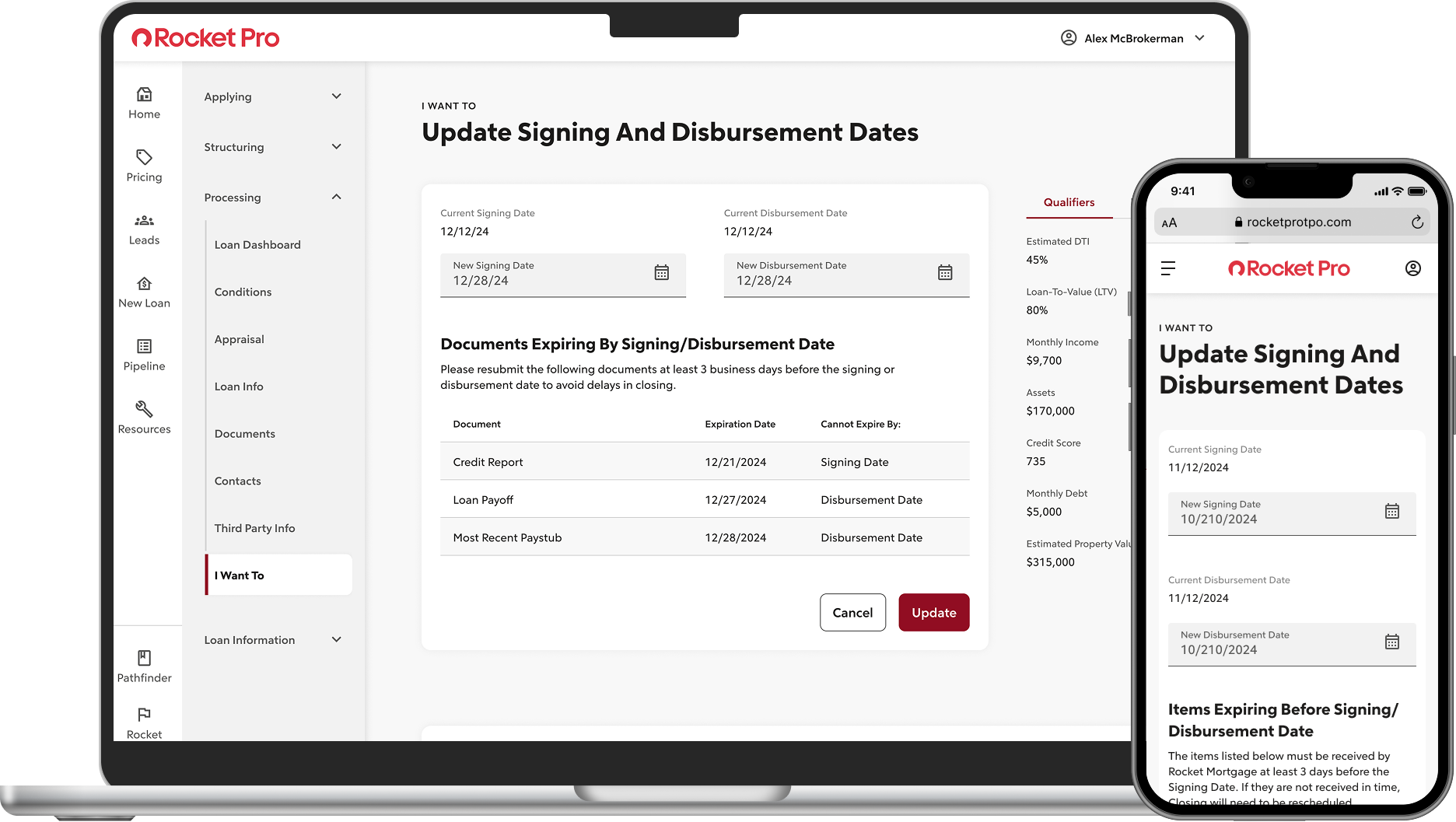
Impact and Outcomes
Reduction of Support Tickets: By allowing brokers to see why dates are unavailable and select new dates earlier, we have reduced ~3,500 monthly support tickets by providing date transparency and earlier selection flexibility.
Enhanced Broker Experience: Brokers now have better visibility and control over their date selections, improving their overall experience with our portal.
Efficiency Gains: Internal support staff can focus on more complex issues rather than handling date adjustment requests.
Problems
Lack of Date Availability Transparency: Mortgage brokers could not view the reasons why specific dates were unavailable, resulting in thousands of support tickets each month requesting changes to the signing dates.
Restricted Date Update Timing: Brokers were unable to update signing dates until certain stages of the mortgage process had been reached. This restriction caused additional support tickets as internal teams had to manually adjust dates.
Improving Task Completion Rate: Out of over 2,500 monthly visits to the closing calendar page, only 60% end in a successful date submission.
.png)
Research and Requirement Gathering
To understand the root causes behind date unavailability, I collaborated with our operations partners and conducted a thorough analysis of all potential reasons why dates could be restricted. This involved:
Interviews with Stakeholders: Engaging with customer support and internal teams to gather insights on common issues and pain points. We found 19 reasons why a date could be unavailable. These mostly had to do with documents expiring, but also included the rate lock expiring and regulatory reasons such as short sale requirements.
Analysis of Support Tickets: Reviewing thousands of support tickets to identify recurring themes and specific problems related to date selection.
Map the User Flows: Map out the experience for modifying the signing and disbursement dates with our new process enhancements.


Design and Redesign
Based on our findings, we embarked on a comprehensive redesign of the calendar interface:
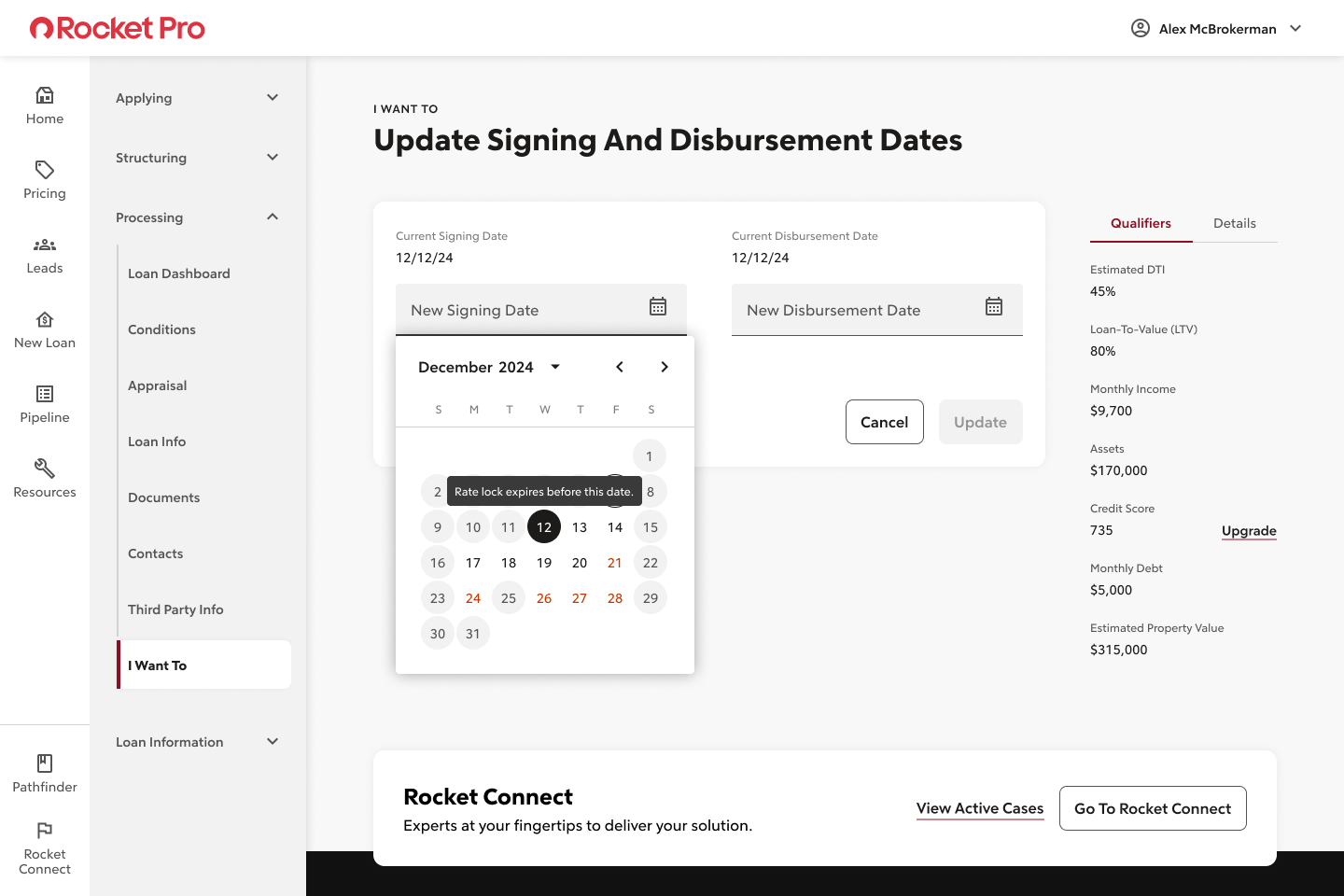
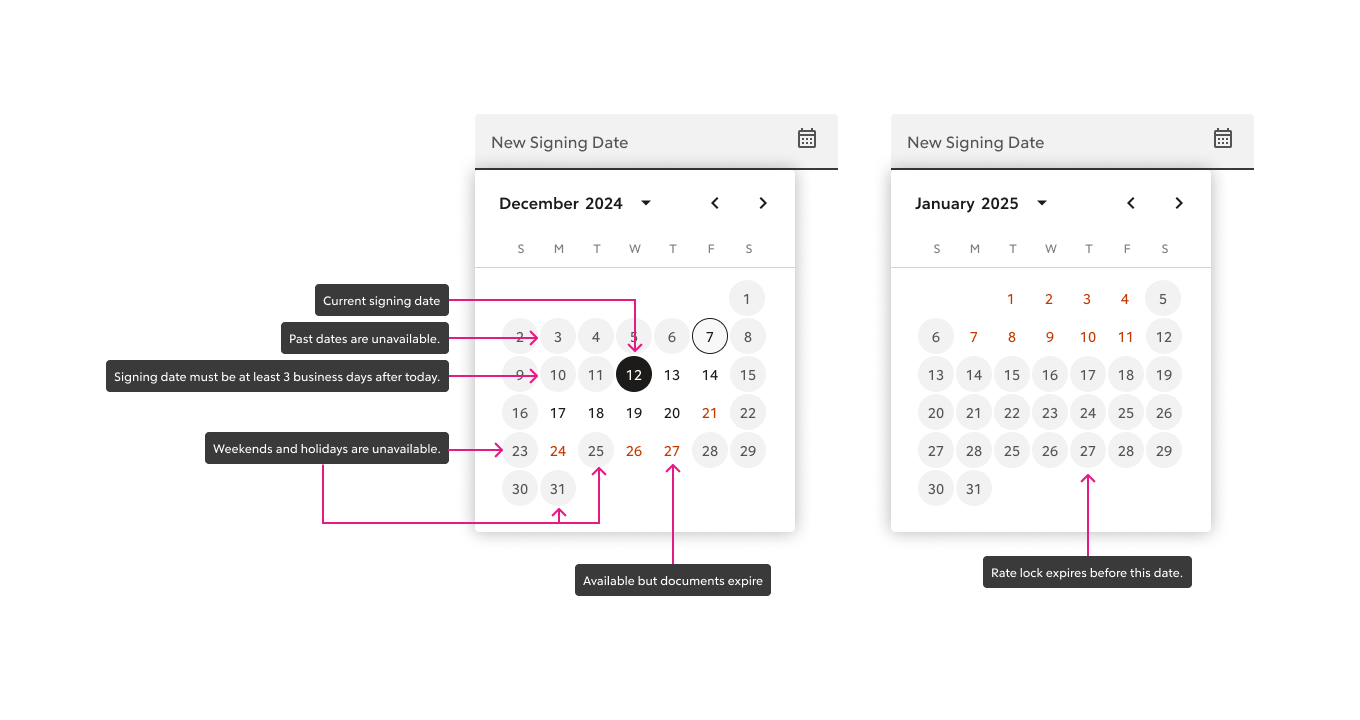
Tooltip Integration: We introduced tooltips to provide real-time explanations for unavailable dates. When brokers hover over or click on a restricted date, a tooltip would appear detailing the reason for the restriction.
Dual Calendar Design: We initially explored a single calendar for both dates but chose two distinct selectors to clarify the conditional logic: disbursement dates depend on signing dates, making navigation clearer.

Ultimately, we went with this approach because the disbursement date availability depended on the signing date selection. Having a single calendar increased the cognitive load for the user unnecessarily, and we ultimately opted for the simplest option. When hovering over an unavailable date, a tooltip appears that explains why that date cannot be chosen. We wrote many versions of these tooltips to provide as much detail as possible for date availability.
Expanding Flexibility
In phase two, we enabled earlier date selection and added document management logic: brokers selecting dates that would expire documents see those dates in orange (our semantic color for warning) on the calendar and receive a list of items requiring re-upload at least 3 days before the new date.
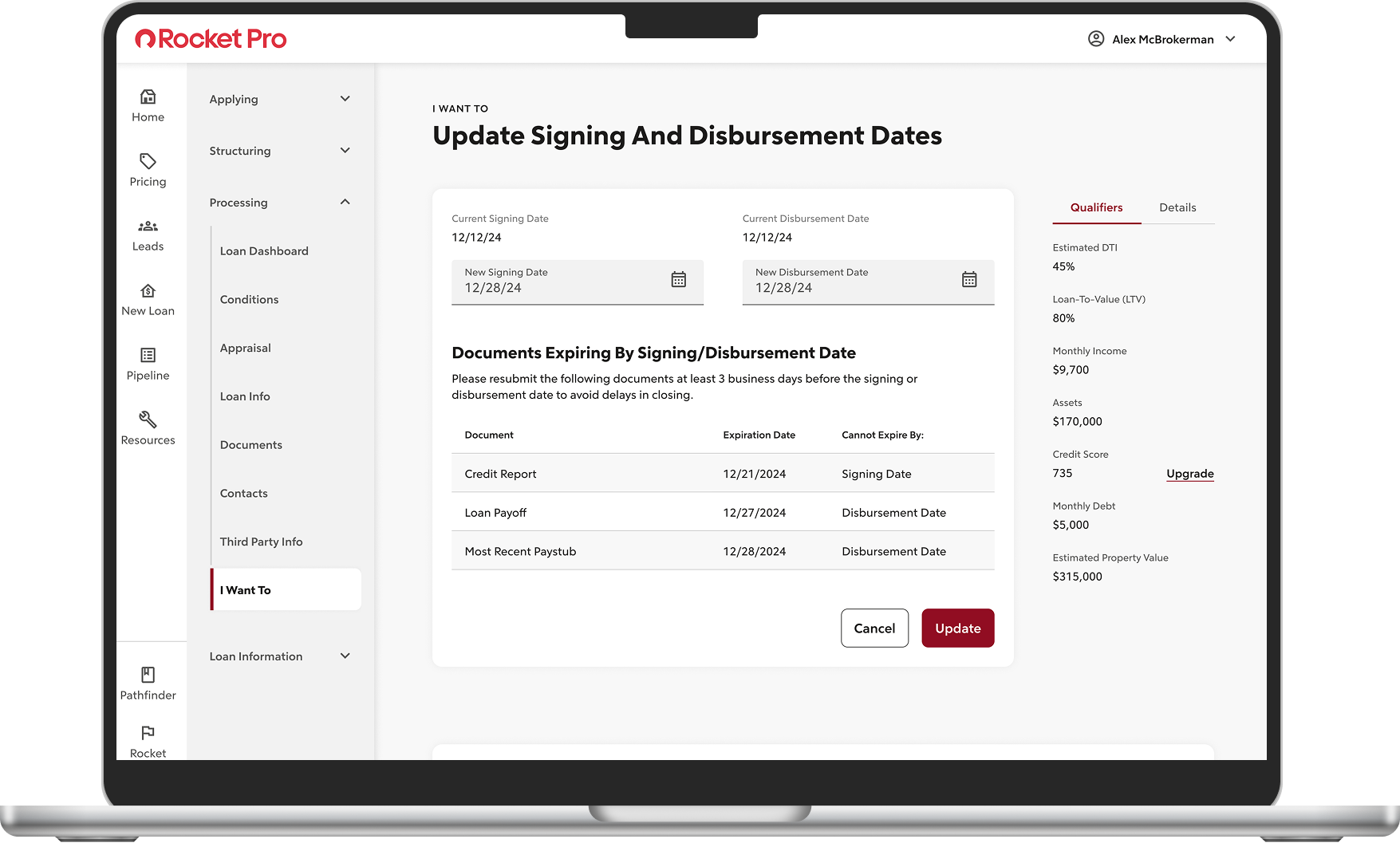
Once the broker selects a date with expiring documents, they are see a list of which documents will expire and are asked if they are sure they want to change the date. It's critical that brokers understand that documents must be re-uploaded to the portal at least 3 days prior to the new signing date in order to proceed as normal. We want brokers to have the visibility the need in order to be able to answer questions for their clients and provide excellent service.
What Users Said
During user testing, all participants were able to select the assigned signing or disbursement date from the calendar. All participants were also able to identify why dates were unavailable. Interestingly, users were divided on what action to take if their borrower requested an unavailable date. Some participants said they would call their account executive and ask for an exception, and others told their clients to select a new date.
- "The loan snapshot was a game changer" (5/5 mentioned)
- "I feel the new portal is an improvement" (Final thoughts)
- "3/5 said easy" (about the task)

Conclusion
By providing date transparency and earlier selection flexibility, we reduced ~3,500 monthly support tickets and gave brokers more control over their workflows. The two-phase approach balanced business constraints with user needs.