
Adding DSCR Loans To Rocket Pro
Impact
- $244M projected annual revenue for Rocket Pro
- $642M projected total revenue across Pro and Retail channels
- 675 loans with rate locks in first 6 months
- $74M in closed volume in the first 6 months
- 50+ screens updated across 6 workflows
- 2 products launched: 30-year and 40-year interest-only
Background
Market Context
DSCR (Debt Service Coverage Ratio) loans qualify borrowers based on rental property income rather than personal employment income, serving real estate investors. This is a non-agency product sold to private investors rather than government entities like Fannie Mae or Freddie Mac.
Rocket Pro partners had been requesting DSCR loans for years. Our competitors already offered these products, putting Rocket at a competitive disadvantage in serving the growing investor market. Industry data showed DSCR loans representing nearly 30% of non-QM loan activity, with demand up more than 50% year-over-year.
Following Rocket's acquisition of Redfin, we needed the ability to close loans under rebuttable presumption guidelines, creating an opportunity to expand our product offerings while serving a new segment of clients who may not qualify under conventional guidelines.
The Challenge
What initially seemed like a "handful of screens" expanded into updates across nearly every part of the Rocket Pro portal:
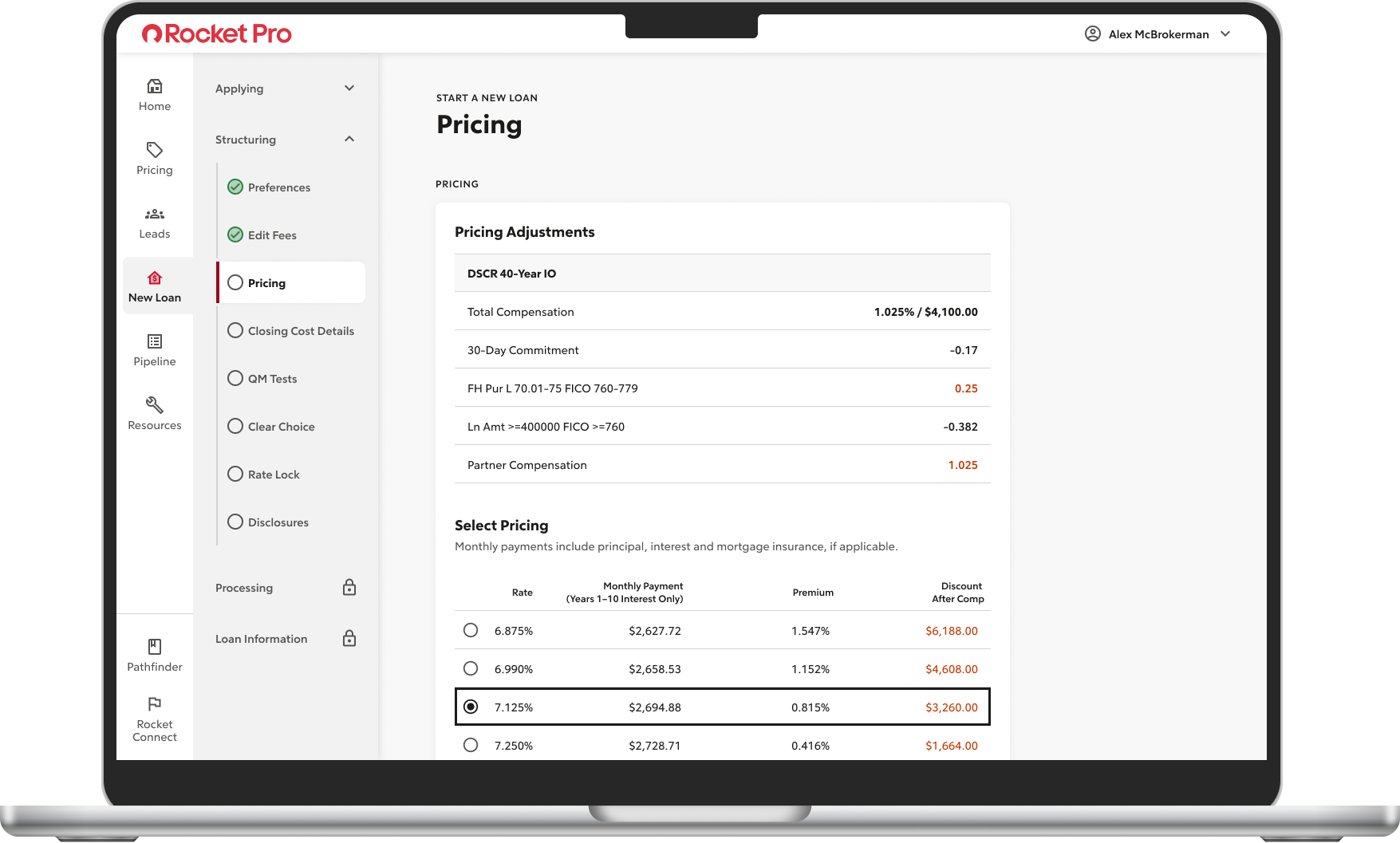
- Pricing Calculator (complete rebuild required)
- Start A New Loan (loan application flow)
- Loan Edits (self-service loan updates)
- Change in Circumstance
- Rate Lock
- Appraisal workflows
We launched two DSCR products simultaneously - a 30-year fixed and a 40-year interest-only option - each with different qualification requirements and restrictions.
I was the sole designer supporting this feature across 200+ people from engineering, product, capital markets, and compliance teams.
Complexity
Constantly Evolving Requirements
Requirements changed weekly throughout the 6-month project. Our product manager had to fight for Rocket Pro representation in planning meetings, as the Product Lab team initially focused on the retail channel despite brokers being the primary users.
I received Slack messages with new field requirements regularly - sometimes conflicting with previous specifications. With over 110 stories and 50+ acceptance criteria in Azure DevOps, maintaining clear documentation became critical to project success.
Design System Fragmentation
Updates spanned both SPARK and RDS6 design systems, with our newer R4 system on the horizon. Many pages hadn't been updated in years and required complete rebuilds to match current design patterns before I could even begin implementing DSCR-specific changes.
The pricing calculator, for example, needed to be reconstructed from scratch - essentially doing double the design work to baseline the experience and then layer in new functionality.
Compliance-Driven Constraints
Since DSCR is a non-agency product, investor requirements could change at any time. We designed for flexibility, minimizing hard-coded logic that might need updates if regulations changed. This meant documenting every conditional state and variation for engineering teams to implement.
Approach
With requirements changing frequently and tight compliance constraints, my focus was operational excellence: maintain crystal clear documentation, annotate every state and logic variation, and ensure engineering teams had exactly what they needed to build correctly the first time.
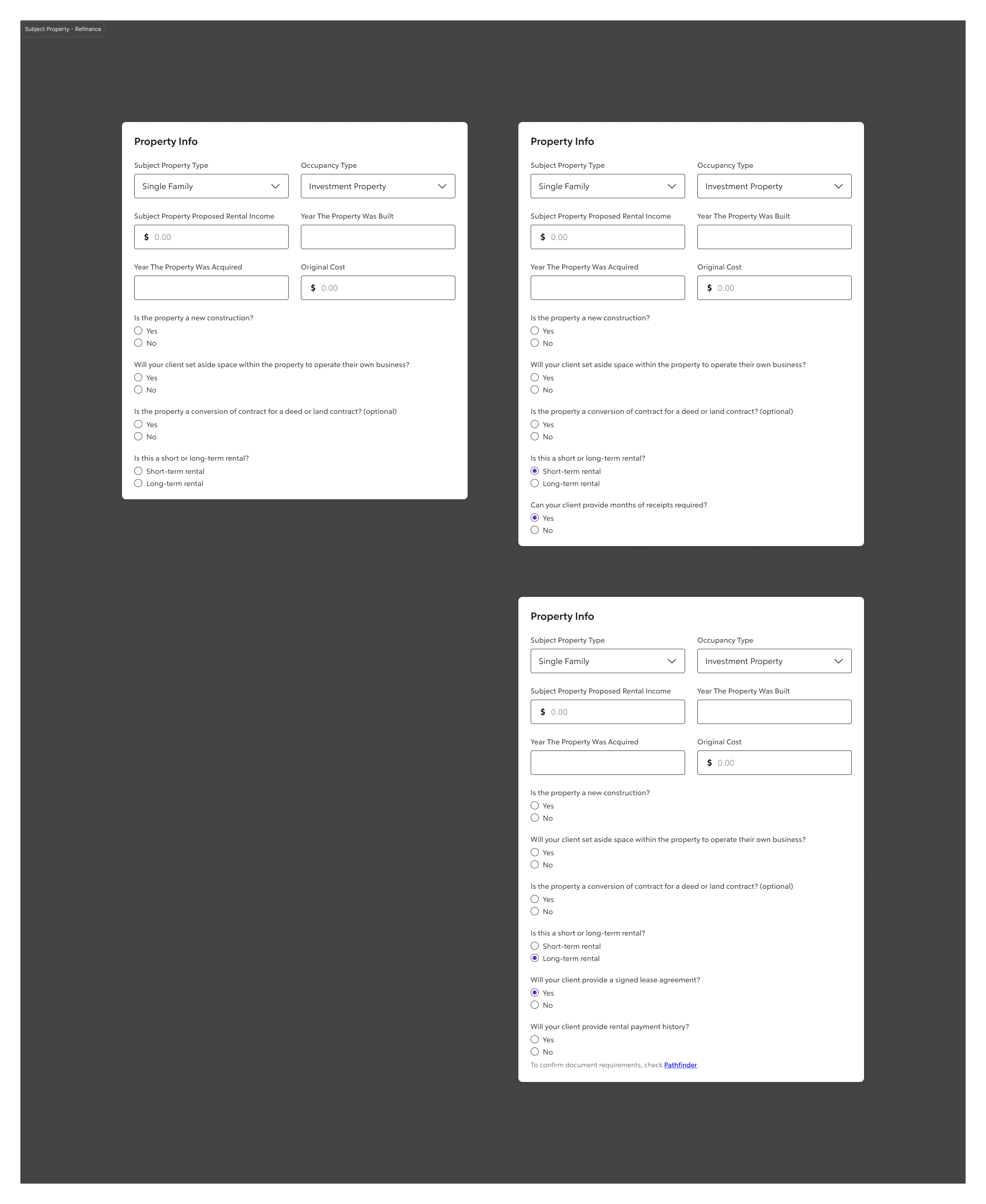
- Managing State-Specific Logic Features like prepayment penalties varied by state, requiring careful organization of conditional logic. I used radio button groups that showed or hid options based on the subject property's state. Additional conditional fields appeared throughout the application based on user selections - for example, rental property duration triggering questions about lease documentation.
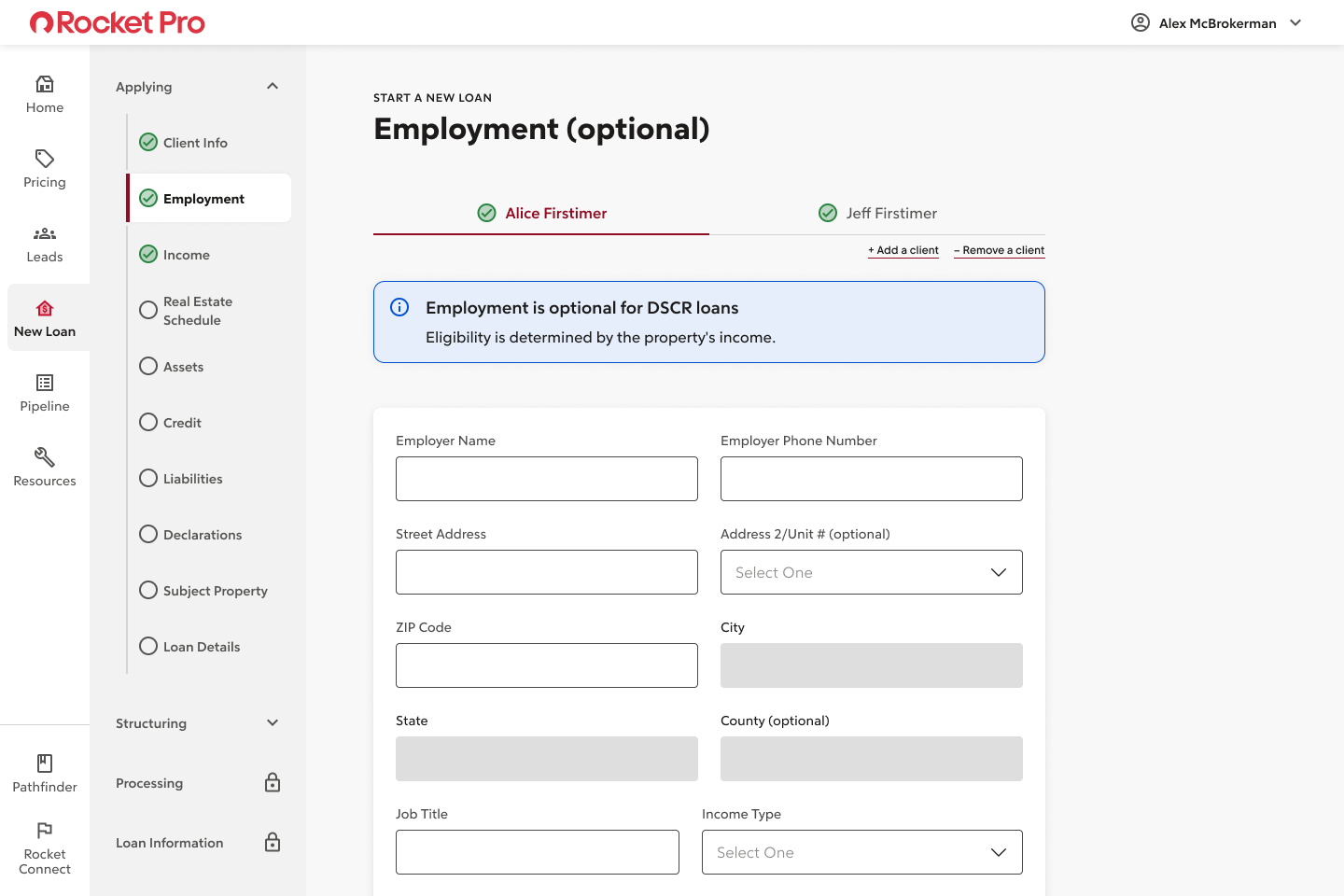
- Introducing Optional Page Patterns DSCR loans don't require employment income, assets, or liabilities data for qualification since borrowers qualify based on rental property income alone. I introduced a new pattern using alert banners to communicate optional pages, marking them as complete before users reached them. This streamlined the application flow while maintaining clarity about what was and wasn't required.
- Rebuilding Core Experiences The pricing calculator hadn't been updated in years. I rebuilt the entire interface using current design patterns while integrating DSCR-specific fields and logic for both the 30-year and 40-year interest-only products.
.png)
- Managing Multi-System Updates Updates spanned both SPARK and RDS6 design systems. I had to baseline existing experiences before implementing new requirements, essentially doing double the work for pages that needed design system migration.
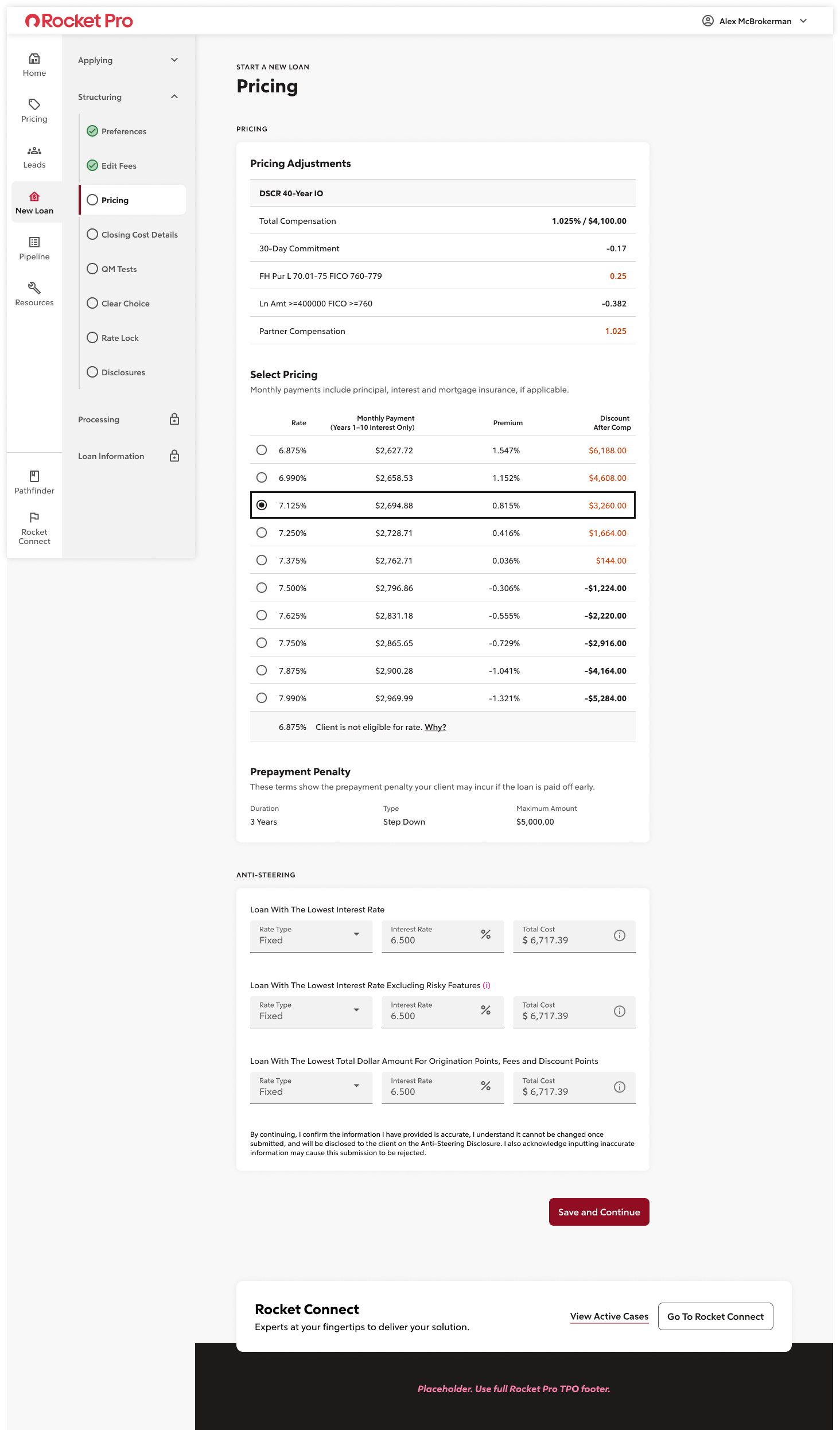
- Comprehensive Design Documentation With multiple engineering teams working across different parts of the portal, I maintained extensive Figma annotations documenting every state, edge case, and conditional logic variation. I walked engineering teams through designs multiple times, answering questions via Slack and conducting QA reviews as they implemented the work. When engineers flagged discrepancies or edge cases, I reviewed the implementations and provided feedback on necessary updates.
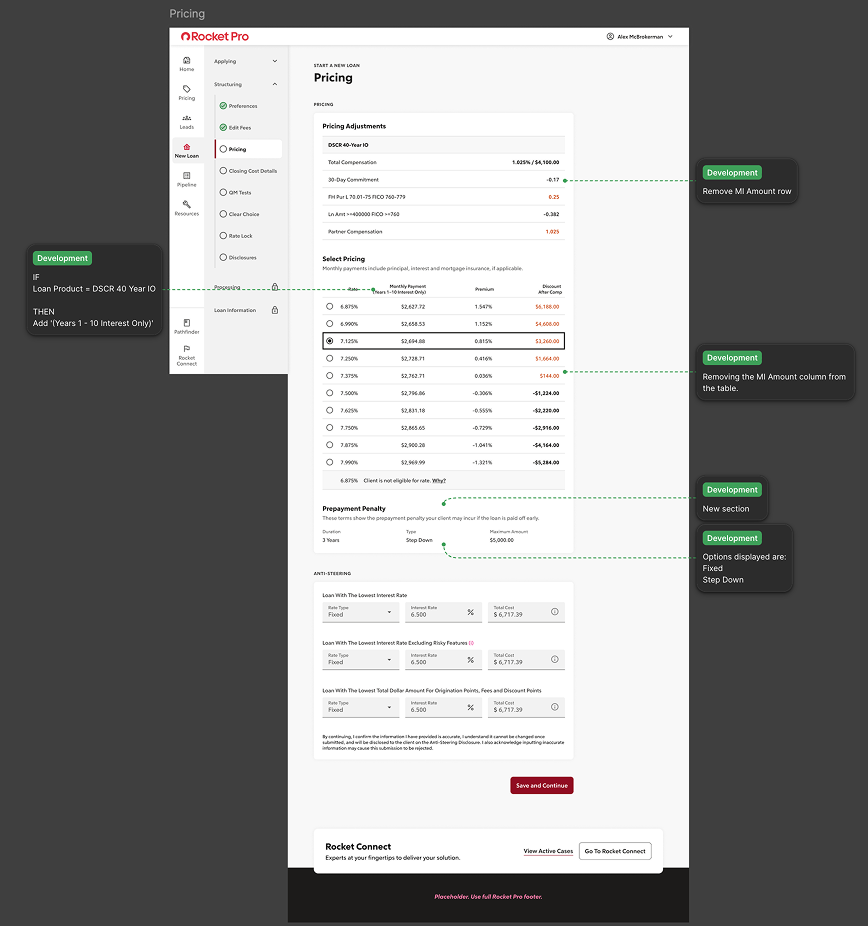
- Quality Assurance During Implementation As engineering teams built out the designs, they reached out via Slack for QA reviews. I reviewed implementations against specifications, identifying areas where updates were needed to match the intended design. This ongoing collaboration ensured the final product matched design intent despite the complexity of managing updates across six workflows.
Updates spanned both SPARK and RDS6 design systems (For instance the Applying section is in SPARK and the Structuring section is in RDS6). I had to baseline existing experiences before implementing new requirements, essentially doing double the work for pages that needed design system migration.
Industry Response
The launch of Rocket Pro's DSCR product generated significant industry attention, with coverage across major mortgage publications:
"Our partners have been asking for DSCR at Rocket Pro. When we developed the product, it made sense — what they wanted was not just the product, but they wanted it coupled with what Rocket Pro is known for when it comes to pricing, consistency, speed, and then, of course, certainty."
— Cory Scholl, Executive Vice President of Sales, Rocket Pro
Multiple industry publications covered the launch, noting Rocket's entry into the DSCR space as a significant market development. The product arrived as DSCR loans were experiencing explosive growth industry-wide, with demand up more than 50% year-over-year.
Delivery and Impact
Timeline
6-month project (May-November 2025) with one deadline extension due to evolving compliance requirements. Coordinated across multiple engineering teams, product managers, and compliance stakeholders throughout.
Launch Success
Launched mid-November 2025 with minimal post-launch issues. No design fixes required since launch - engineering teams had clear specifications that translated cleanly to production.
One account executive sent a Slack message expressing excitement about the launch, noting how long partners had been requesting this capability.
Business Impact
- $244M projected annual revenue for Rocket Pro
- $642M total projected revenue across channels
- $14M closed in first 2 months with another $34M in pipeline
- 610 loans registered since launch
- 192 active rate locks with $300k average loan amount
- Fulfilled years of partner requests for this product type
Market Context
Last year, Rocket Pro processed $100B in total loan volume across all products. Adding DSCR unlocks a new market segment - real estate investors who qualify based on rental income rather than employment income - allowing our partners to serve clients they previously couldn't help.